
3 Easy Steps To Stop Your Dog Pulling On The Leash

We only review products we tested ourselves. We have affiliate partnerships, so we get a share of the revenue from your purchase.
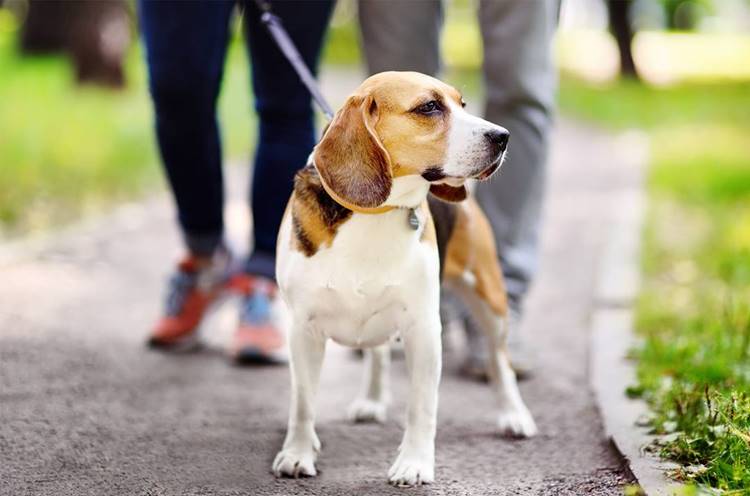
Walking your dog can be one of the most relaxing times of your day but it can also be one of the most stressful bits.
It all depends on how your dog walks on the leash.
Going out is a very exciting time for dogs, so much to sniff and see so you can understand how it’s easy for them to forget the human on the other end of their leash.
Sometimes, it seems they even forget to breathe, considering the way they choke themselves by pulling so much.
Teach Your Dog To Stop Pulling On The Leash
Teaching your dog to walk on a loose leash may sound tricky and traditional methods usually are, but by doing it our way, it’s actually simpler than it looks.
And, in three easy steps, we’ll show you how to train your dog to stop pulling on the leash.

Step 1 – Stop When Your Dog Starts Pulling
You’ve probably tried this and ended up giving up, but it’s actually the best starting point.
Whenever your dog pulls on the leash, just stop!
This might mean you don’t leave the front door and that’s okay. You just need to stand still and don’t move. Each and every time (this is tricky, we know). Consistency is key.
It’s very very important, your dog needs to understand what you want from him and he won’t if you continue to walk even though he’s pulling.


Step 2 – Wait Until Your Dog Looks At You
By now your dog has noticed you’re not moving. He tried and tried pulling at the leash and you just won’t budge. What can he do to get things going? See what you want. How will he do that? He’ll stop and look at you.
If by any chance your dog is the stubborn type (like ours) this might take him a while, so a quicker way to get his attention is to attract it.
As soon as he looks at you drop some food, kibble or training treats on the ground then turn away from him.
Step 3 – Turn The Other Way Around
Now that you have your dog’s attention, turn around and face the direction you have just come from and encourage your dog to join you by dropping a treat behind you for him to collect as he reaches you.
You’ll want him to eat the reward just behind you, the ideal position for your walk. You want him to get comfortable behind you so he’ll want to do it on his own.
Start walking as soon as he picks up the treat. If he rushes past you and resumes the pulling, you’ll know what to do, go back to step 1 as often as it takes for him to understand what you expect of him.
Eventually, he’ll understand what he needs to do in order to get his walk and once he does you’ll be able to walk him on a lose leash.
This might be an exercise you’ll want to do when your dog is calm and not desperate to do his business in the nearest tree, because he’ll probably won’t be able to focus.
Also, take his time with him, once he gets it, if you remain consistent, he’ll never go back to his old ways

Don't miss out! Sign up here to get the latest tips

* indicates required


Choosing The Right Gear
You can find some great “no-pull” equipment that will help get the situation under control until you complete the training, particularly if we’re talking about a heavy dog.
For dogs who pull on their leashes, we do recommend harnesses over collars, because sometimes all that pulling might hurt their throats.


The Rabbitgoo no-pull harness is our number one suggestion for a harness that will be effective and safe for your dog.
Also, the choice of leash is important, you’ll want one that can give your dog some room but not enough for him to gain some distance and make it harder for you to control him.
Here is our top pick:

The Baapet dog leash is by far the most resistant and confortable leash for dog walking. We bough one a few years ago and it is still good as new.

You can get all the right gear, but if your dog is just too anxious and afraid to be outside, he’ll run away from contact with other dogs and strangers.
So he will pull and rush during your walks and what is meant to be the best part of his days will be the most stressful.
With the anti-anxiety vest, the results are immediate and amazing, you’ll see his demeanor change, he will walk taller, his tail raised and a bit of a spring in his step.
Better yet, he will feel calmer and take his time to smell everything and enjoy himself.
It won’t magically solve his lack of interaction with other dogs and people, that will take some time, but he will feel safer and more protected.


It may sound a bit farfetched, but an Anti-Anxiety Vest can make all the difference.

Last but not least, pick the best treats for your dog, you may think that any will do but we find the more they love them, the easier it will be to keep them focused.
Also, remember, if you’re going to train him for a while, you’ll want something low on calories but high on taste, something healthy that won’t cause any gastrointestinal issues

Zuke’s Treats only have 3 calories per treat and have the perfect size for training your dog.
Conclusion
Is your dog ready for long walks on the leash? Great!
How about making things interesting? Mix things up, walk him past some really interesting distractions and see how he behaves. Like dogs he loves or places with great scents.
Now you’ll teach him there’s a time for playing and a time for keeping focused. And once he gets it right? Reward, reward, reward!
Keep it simple and consistent and enjoy your time with your dog and those walks together.


Don't miss out! Sign up here to get the latest tips

* indicates required

Comments

Popular posts from this blog

?Dog Behaviors What They Mean

Dogs have learned to measure with humans and wish to please United States. But, we have a tendency to still need to train them to avoid a number of their additional harmful behaviors. We have ready an orient a number of the foremost common dog behaviors, what they mean, and the way you'll be able to address them. Pet Behavior issues Aggression and scavenging square measure the 2 commonest dog behavior issues. There square measure several pet habits that homeowners conjointly take into account harmful or annoying. Yet, these 2 square measure the foremost dangerous for your pooch and therefore the individuals and animals around them. As a primary step, if the problem is new and strange in your dog’s routine, you must take into account taking your pooch to the vet to rule out any health issues. It’s conjointly necessary to notice that some behaviors thought-about major for a few homeowners square measure non-issues for others. for instance, some homeowners would ne...

Internet Just Found Home For This Sad Shelter Dog, And His Before & After Pics Will Make Your Day

When a reddit  user  saw this lonely doggie in a shelter, she decided to share his picture with the world, hoping it would encourage someone to adopt him. The photo, in which the canine looks like some adorable cartoon character, had the following caption: “This little guy waiting for his new family to pick him up.” And that was it – the Internet’s heart just melted. The woman wrote that the doggie’s name was Mack and that the “Pouty Hippo” could be adopted from the Baltimore Animal Rescue and Care Shelter. As the Internet community is known to make great things happen when people act together, it’s no surprising that 7 days later, Mack the doggie featured in another post. This time he looked super happy in the picture, and it was announced that he had been adopted. The doggie, whose joy shows on its radiant face, now has a new name – Frank The Tank. His loving owner created an Instagram account to mark the beginning of a brighter chapter of the doggo’s life. Oh, and fo...

This Is Why Dogs Kick Their Feet After They Poop – I Had No Idea!

After taking your dog out to do their “business,” you may have noticed that they kick up the grass and dirt behind them. Is it just strange dog behavior or is there an actual purpose? The reason might surprise you. After going potty, you might have noticed that dogs have a tendency to use their paws to kick and dig up the surrounding areas. At first, it might seem like they’re simply covering up their poo or wiping their paws  — but as it turns out, there’s an actual reason and logic behind the habit. Almost every dog owner has noticed their pup engaging in this behavior, and most people don’t really give the action a second thought. Our dogs, however, are much more interesting and complicated than we give them credit for. Share Source: Vet Street Kicking their paws up in a backward motion is so much more than just wiping off a mess. Dogs have glands located in their paws that release unique pheromones; they often will rub or scratch their paws along the ground to...